Posts in topic: community engagement

Always together, even when we’re apart

together_banner

Do you remember—so, so long ago, back in January—when the idea of working from home for a couple of days seemed like a nice option? An opportunity to catch up on the buried emails, check off a few paperwork “to dos” from your list, or spend some focused time on a pet project.

Now? Even though I’m starting to get used to this “new normal,” I tell you this: once it’s safe to return to work, I may live in my library for a week.

Because while we’ve been doing an amazing job of staying in touch through our web meetings, email, chat, and texts, it’s just not the same. I miss real interactions with people. I miss the social interactions that make our libraries real communities.

It’s the same people I miss so much who are making isolation not just bearable, but truly remarkable. Library colleagues are approaching this crisis with the same mix of pragmatism and optimism that I’ve encountered throughout my years as a librarian. Nowhere was this more evident than in our virtual OCLC Global Council meeting last month.

Read More


We may be apart, but we’re in this together

engagement_award_header

I’m pretty sure that we can all agree that life and work don’t feel “normal” right now. Even as we unite as communities to “flatten the curve” and adopt social distancing routines, it’s hard for us to be apart from colleagues, friends, and our community. But there’s solace in knowing that our communities are protected by our combined effort and that we’re all in this together. I hope everyone reading this is healthy and safe.

Over the last few weeks, I’ve had so many conversations with library colleagues that have amazed me. Even though the way that we’re supporting our communities may have radically changed, our conversations have felt remarkably “normal” in that they all have the same balance of professional responsibility and personal good humor that I’ve come to rely on, time and again, during my career.

You are all amazing. And your libraries do amazing things, which is why we put the OCLC Community Engagement Award out there—to hear more about them and spread the word. And it’s why we’re extending the nominating deadline from April 30 to May 31.

Read More


Public libraries generate social capital that can save lives

social_capital

When disaster strikes, libraries are there to help. In California, where many have been forced from their homes due to forest fires and power outages, libraries like Folsom Public Library have become a refuge for people who need to charge devices, use WiFi, or just have a place to go. In March of 2011, a powerful earthquake triggered enormous tsunami waves in the T?hoku region of Japan, killing thousands of people, driving hundreds of thousands from their homes, and leaving millions without electricity and water service. In the months after this horrific disaster, as hundreds of government services, NGOs, and private and international relief agencies struggled to help communities recover, residents also looked to public libraries for help.

Why is that? Libraries don’t provide food, water, electricity, or medical services. In many cases, libraries had suffered the same catastrophic losses as their neighbors; staff had perished or been injured, buildings completely destroyed or unusable, resources gutted. Why, then, did people so quickly turn to libraries after a disaster? Because of social capital.

Read More


Planning to be community catalysts

nextbanner_libraryfuturesLike many institutions, my university kicked off a 2030 “visioning process” last year and I was asked to present on how the library fits in. Activities like that are often interesting, sometimes fun, and always a bit daunting. Knowing that any one person’s vision for the future is going to be limited, my first thought was, “I need to start talking to some colleagues.”


The timing for that need was remarkable, because the 2018 OCLC Americas Regional Council (ARC) conference was just around the corner. I was able to attend sessions in Chicago with a “visioning mindset” and use the conference to discuss ideas with great colleagues, and even chat with OCLC researchers about related work.

That’s one of the great benefits of our OCLC community—the opportunity to connect with fellow leaders and share the knowledge and insights that help us better prepare for our libraries’ best future.

And that’s exactly the theme for this year’s Library Futures regional council meetings.

Read More


Community engagement: Redefining the library as town square

anythink_banner_02

Libraries are evolving, leaning outside of our walls, connecting with our communities in new and powerful ways. Defining our “why” requires understanding how to shift our focus from books to people. Our purpose is to support people and their quality of life. While there may be many definitions, community engagement isn’t just about awareness, marketing, and sending staff out into the community. Community is at the center of everything. At Anythink, the public library system for Adams County, Colorado, it is at the heart of everything we do.

Like many libraries, our recent strategic planning research included a purposeful listening tour. We found that our community sees the library as its center, its connector. They asked for the library to become even more focused on creating community. As a result, we have adopted the concept of library as town square.

Read More


Reenergize your marketing strategy in three simple steps

2019-03-27_Marketing-Strategy

Having worked in public libraries of all sizes for the past 15 years, I’ve found there’s one common thread. Actually, there are many, but one really critical thing stands out. We don’t toot our own horn nearly enough, yet marketing always seems like an easy target to kick off our overflowing to-do list. And while we’re generally great planners, when it comes to marketing, we’re not always the best implementers. This is why I wasn’t surprised that 40 percent of public libraries have a communications strategy, but only 17 percent keep it current.

Read More


Four surprising findings from community-centric space transformations

small-smart-banner

There is always something creative and educational waiting for us at the library.

That’s what one library user and parent said about the Ronan District Library in Ronan, Montana, after the library participated in the Small Libraries Create Smart Spaces project, led by OCLC’s WebJunction program with funding from an IMLS National Leadership Grant. The Ronan library, along with 14 other small and rural libraries in the US, transformed library spaces into places for social, active learning.

Thanks to the original program’s success and supplemental funding from IMLS, the WebJunction team is bringing this opportunity to 15 more public libraries in 2019. We often say libraries are the heart of a community, but one key to successful transformations involves placing communities at the heart of the library. The libraries each led a community discovery process, which helps them see their library through the eyes of community members. This opened a path to rediscovering the unique personality of the library and the ways people interact with it.

Read More


Why the future of your library depends on others’ knowledge

2019-03-14_EMEARC[3]

Like most libraries, my library in Madrid is facing new and challenging resource constraints, user requirements, and technology demands. Some areas are called on to do more work with fewer staff and lower funding. And all are dealing with user expectations based on global commercial powerhouse brands like Google, Apple, and Amazon.

What we have found at Complutense University is that the key to meeting major local challenges is to recast them as shared global opportunities.

Who do we share them with? All other libraries, worldwide.

Read More


Supercharge your storytimes to make a real impact on early childhood literacy

storytime

To an outsider, a library storytime can seem deceptively simple—grab a favorite book and ham it up. Use a puppet, silly voices, and everyone will have fun.

Storytimes are entertaining! But libraries are in a unique position to connect with families and their children from birth. Skillful, thoughtful storytime practitioners are key to the role libraries can play as anchor institutions within a broader community learning infrastructure.

When storytime providers are intentional in supporting early literacy, interact with participants, and take time to assess their programs, then early literacy behaviors increase.

It’s what we call supercharging your storytimes.

Read More


Invite your community to shape smart spaces

smart_spaces

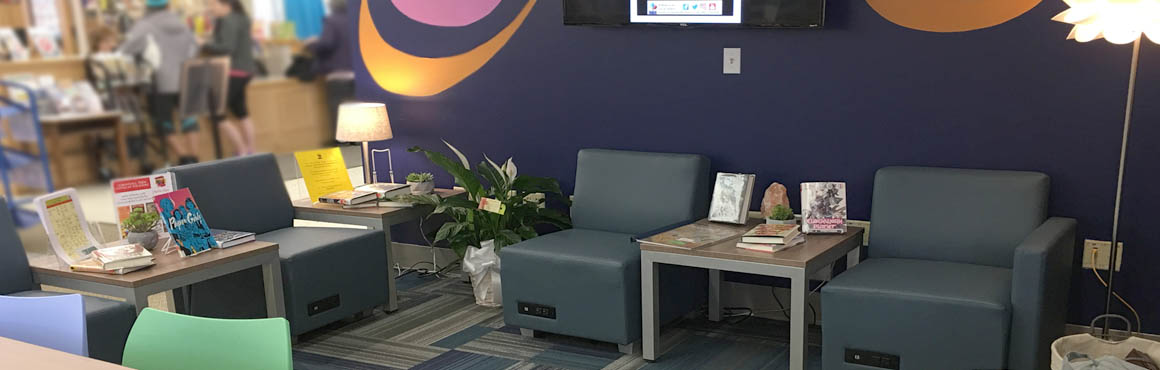
When 15 small and rural libraries joined the Small Libraries Create Smart Spaces project, they signed on for a journey toward transforming their physical spaces and library services. Their exploration was guided by principles of placemaking, design thinking, and active learning. Along the way, they connected with their communities in refreshing new ways that catalyzed relationships and opened up possibilities.

Transformation is a big, ambitious word, charged with expectation of profound change. It might seem like an oversized challenge for libraries that are defined by small: small town, small building, small budget. But these 15 intrepid libraries, serving populations of 560 to 16,000 people, discovered the key to unlocking true transformation: meaningful connection with the community.

Rather than a more familiar positioning of “the library as the heart of the community,” each sought to put their community at the heart of the library.

Read More