Posts in topic: partnerships

Continuing the legacy of the Bill & Melinda Gates Foundation’s Global Libraries program

gates2

By Lorcan Dempsey, Vice President, Membership and Research, Chief Strategist, OCLC; and,
Sharon Streams, Director, WebJunction

The first initiative launched by the Bill & Melinda Gates Foundation’s Global Libraries program was one to improve computer technology and internet connectivity in US public libraries. And it was a total game changer for thousands of small, rural communities across the United States.

That initiative then spurred the idea for an “online portal” that would connect isolated library staff to ongoing support and resources. From there, a 2002 foundation grant to OCLC led to the launch of WebJunction on May 12, 2003, at a celebration at the Library of Congress.

Read More


Invite your community to shape smart spaces

smart_spaces

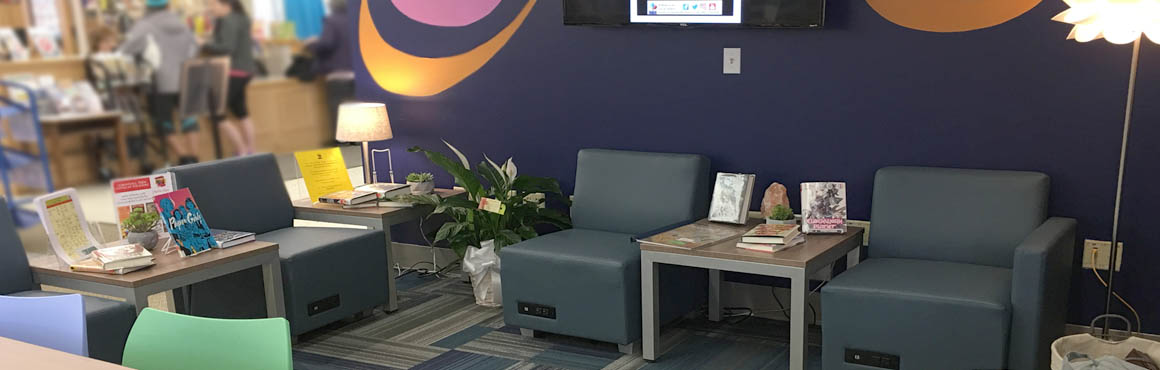
When 15 small and rural libraries joined the Small Libraries Create Smart Spaces project, they signed on for a journey toward transforming their physical spaces and library services. Their exploration was guided by principles of placemaking, design thinking, and active learning. Along the way, they connected with their communities in refreshing new ways that catalyzed relationships and opened up possibilities.

Transformation is a big, ambitious word, charged with expectation of profound change. It might seem like an oversized challenge for libraries that are defined by small: small town, small building, small budget. But these 15 intrepid libraries, serving populations of 560 to 16,000 people, discovered the key to unlocking true transformation: meaningful connection with the community.

Rather than a more familiar positioning of “the library as the heart of the community,” each sought to put their community at the heart of the library.

Read More


Wikipedia the WebJunction way

2017-07-30 Wikipedia-yellow-OCLC

In the past decade, Wikipedia’s reach has expanded. It’s the fifth most-visited platform globally.[1] And the quality has stabilized. A 2012 Oxford University study comparing Encyclopedia Britannica to Wikipedia found no significant difference in quality or reliability between the articles they compared. However, research suggests that asymmetries in the demographic profile of the existing pool of editors, which are 80–90% white males, has led to biases and underdeveloped content areas.[2]

To improve the encyclopedia and address these gaps, volunteers and Wikimedia Foundation staff have collaborated to host outreach programs and editing events. These have seen successes, but there’s still room for improvement. Only some of these programs have focused on galleries, libraries, archives and museums (GLAM, in Wikimedia terminology), and none of the outreach has been specifically geared to public libraries and their important role as champions of information access and mainstays in serving their local communities.

The time has come for an effective, focused training program that brings Wikipedia to US public libraries.

Read More


To be a better librarian, break into museums and archives

2017-05-22 Library-Archives-Museums

An archivist, librarian and museum professional walk into a conference …

In 2016, 18 librarians, archivists and museum professionals came together as “field anthropologists” for the “Collective Wisdom: Libraries, Archives and Museums (LAM) Conference Exchange” to find out more about each other’s practices and cultures. They attended three major LAM sector conferences, working together to look for new opportunities for collaboration.

As an administrator to the Collective Wisdom cohort, I saw firsthand the group’s deep insights and renewed resolve to connect across all kinds of boundaries. They had never crossed paths before embarking on this experience—but by the end, they had cultivated “professional relationships and friendships that will endure well beyond this project.”

And their readiness to find intersections between each sector’s silos is testimony to a wider desire for collaboration among knowledge professionals. Reflections and recommendations for strengthening cross-sector community and collaboration are captured in their newly published white paper, “Collective Wisdom: An Exploration of Libraries, Archives and Museum Cultures.”

Read More


In support of library funding

Students in library looking at tablet computer

OCLC is a global library cooperative, composed of more than 16,000 library members from around the world. Our members span library types from public libraries serving the smallest rural towns to the largest research libraries in the world.

The knowledge transfer and exchange fueled by libraries enables many notable experiences: the child learning to read; the scientist expanding an avenue of medical research; an entrepreneur building a viable business plan. The individuals in these examples often gain their initial foothold, inspiration and roadmap in a library. We celebrate the accomplishments and the end result of the knowledge, but the journey to these breakthroughs is often not as visible. Libraries play a key role in these life-altering journeys and ground-breaking discoveries.

The role that libraries play continues to grow, based on the evolving needs of their respective communities. Libraries provide internet services, vital not only to learning but also to finding a job and to accessing social services. Libraries directly impact student outcomes, from pre-K and K–12 to community colleges to large research universities. Libraries maintain important collections, preserving the history of our communities, regions, countries and people.

Read More


The long tail of library discovery

long-tail

One of our first OCLC symposium speakers was Chris Anderson, the technology writer and former editor of Wired. He spoke for us at ALA Annual back in 2005 on the subject of his famous Wired article and soon-to-be published best-seller, The Long Tail. Like many others in our profession, I found the subject to be both interesting and appropriate to libraries, as did others whom we quoted in a NextSpace article at the time.

Libraries have been collecting, preserving and promoting “long tail materials” for centuries, of course. That’s the long tail of content. But we’ve also found that, when it comes to WorldCat, there’s a long tail for discovery.

Read More


A library collection of mysteries, murder and mayhem

murder-mysteries

This Halloween, let’s take a peek into the Douglas County Historic Research Center (DCHRC) and try to uncover the mysterious connection between these seemingly unrelated yet terrifying clues:

  • A high-profile murder and kidnapping attempt in 1960
  • The burning down of a county courthouse in 1978 during a jail break
  • The near disappearance of local sheriff’s records in 2000
  • A list of every grave marker in town
  • Attics with mysterious, forgotten books

The common thread?

[Cue spooky music] Digital content management!!!

[Cue maniacal laughter]

Read More


Celebrating the first 500 WMS libraries

wms-500

A decade of remarkable change

In 2006, four library system vendors dominated the integrated library system market. OCLC partnered with most and was just beginning to consider its own solution. In the intervening decade, we’ve seen a lot of consolidation and rapid innovation.

Fast-forward to 2016. The ILS is now a legacy system, “next-gen” is practically passé, and Marshall Breeding has dubbed a new breed of library management and discovery services the “Library Service Platform.” Today, OCLC’s WorldShare Management Services (WMS) is one of only two offerings in this space—a true multi-tenant, cloud-based suite of services for managing and discovering the purchased and licensed collections of libraries. It took only five years for OCLC to attract 500 libraries to WMS, becoming a leading provider in a space that it didn’t even occupy a decade ago.

That would be a major achievement in any industry, by any company. That it was achieved by a nonprofit library cooperative is credit to the unique power behind that success—our members.

Read More


The library of one

2016-02-06 Chip library of one

What does it mean to be a “library user” today? I think we can all agree it’s a question that is less well-defined than in the past. Which is why OCLC Research points out the necessity of “meeting library users at the point of need.” As Lorcan Dempsey puts it in his book, The Network Reshapes the Library, “We are used to thinking about the user in the library environment … a major part of our challenge moving forward is thinking about the library in the user environment.”

I couldn’t agree more. And if the definition of “library user” is fragmented, we need to think in terms of “what people use” as opposed to “what the library traditionally does.” Which leads me to three questions:

Read More